How to Seal Jesmonite & Concrete Planters:
100% Waterproof Sealing Guide
Published on August 26, 2026 • By MakerRatio Materials Lab • Tested with Hydrostatic Water Immersion
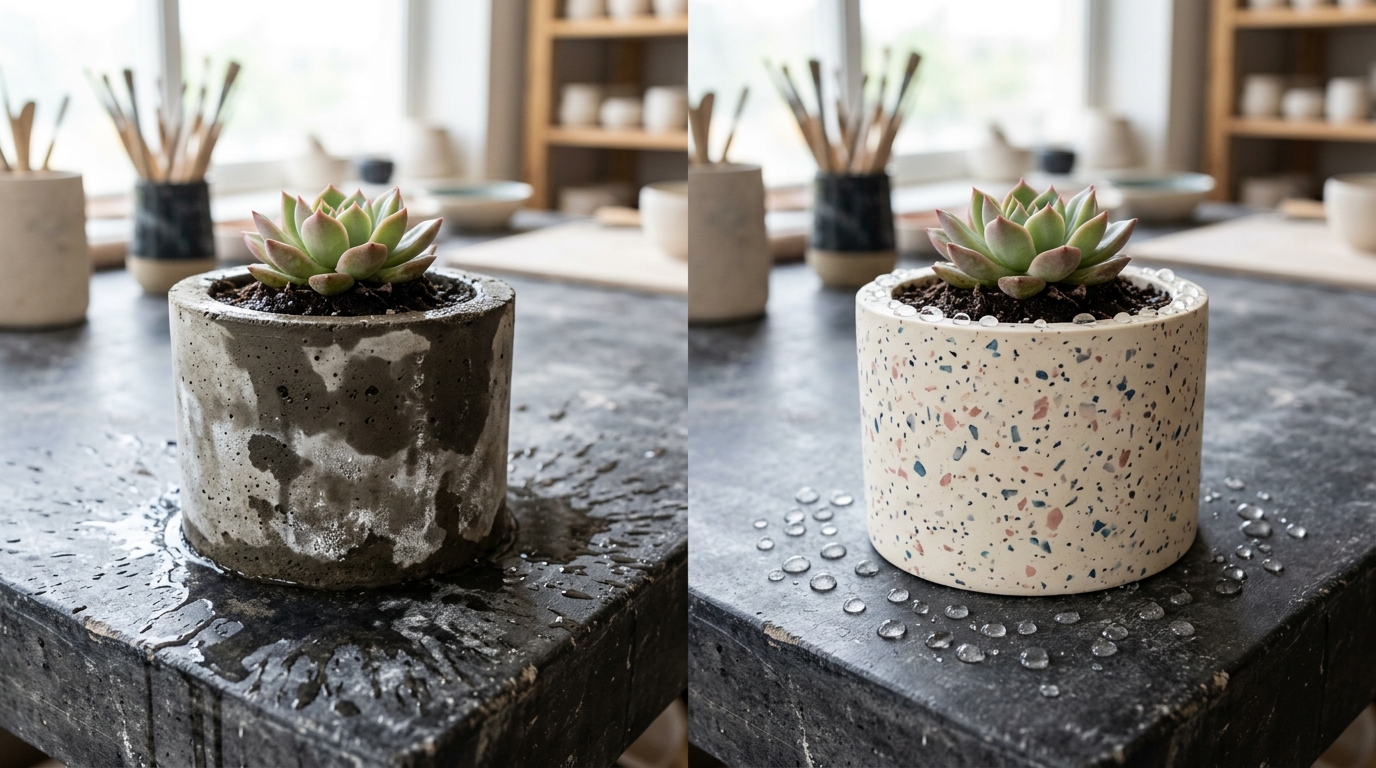
Studio Comparison: Unsealed concrete leaking efflorescence (left) vs hydrophobic nano-sealed Jesmonite planter (right).
How do you make Jesmonite AC100 and craft concrete waterproof for planters? Because Jesmonite and concrete are naturally micro-porous, they absorb soil moisture and leach chalky white calcium salts (efflorescence). To make planters 100% waterproof without altering their stone texture, apply a penetrating Silane/Siloxane nano-sealer in 2 to 3 thin cross-hatch coats 48 hours after demolding. The siloxane molecules penetrate 2mm into the mineral pores and bond chemically, causing water to bead into hydrophobic droplets while allowing trapped internal vapor to breathe outward.
Calculate Exact Concrete & Jesmonite Batches
Enter planter outer dimensions, wall thickness, and base height to calculate exact dry cement powder, sand aggregate, or AC100 base grams.
You poured a gorgeous terrazzo Jesmonite succulent pot or industrial concrete planter, planted a vibrant green jade succulent, watered it for the first time... and two hours later, your wooden coffee table was ruined by a damp puddle of muddy water.
Within three weeks, unsightly chalky white salt stains (efflorescence) begin crawling across the exterior of the pot, and the base becomes soft and chalky.
Both Jesmonite AC100 (acrylic modified gypsum) and Portland craft cement are porous composite networks. When water fills the internal capillary pores, it dissolves free calcium ions and carries them to the surface. Understanding the chemical difference between topical sealers and penetrating nano-sealers is how you create commercial-grade waterproof planters that last decades.
Sealer Types Compared: Penetrating vs. Topical vs. Waxes
| Sealer Chemistry | Surface Finish | Waterproofing Grade | Best Use-Case |
|---|---|---|---|
| Silane / Siloxane Nano-Sealer | 100% Invisible Natural Matte | Superior (Hydrophobic Beading) | Plant pots, outdoor vessels, drink coasters |
| Pure Acrylic Emulsion (Topical) | Satin / Semi-Gloss film | High (Film barrier) | Trinket dishes, bathroom soap trays |
| Beeswax / Carnauba Paste | Buttery soft sheen | Moderate (Spill resistant) | Decorative jewelry trays (dry items only) |
| Mod Podge / PVA Glue | Plastic gloss | Fails (Re-emulsifies) | ⚠️ Never use (Turns white and melts in water) |
The 3-Coat Workshop Application Protocol (Step-by-Step)
Step 1: The 48-Hour Dehydration Window
Never seal Jesmonite or concrete immediately after demolding. Even though the piece feels solid at the 2-hour mark, internal moisture is still evaporating:
- Demold your planter and let it air-cure on a wire cooling rack for a minimum of 48 hours at room temperature.
- If you seal prematurely, trapped water will try to escape, pushing the sealer off and causing cloudy white blisters.
Step 2: Cross-Hatch Penetration Application
Using a micro-fiber cloth, high-density foam brush, or spray bottle:
- Coat 1: Apply a generous, wet coat over the entire inside and outside. Let it soak into the mineral pores for 3 minutes, then wipe off excess with a dry cloth.
- Coat 2: Wait 30 minutes. Apply the second coat in a perpendicular cross-hatch direction to ensure zero missed pore channels.
- Coat 3 (Inside Vessel Only): Apply a third concentrated coat inside the bottom cavity where moist soil will rest.
Step 3: The 24-Hour Chemical Cross-Link
Siloxane sealers require 24 hours to finish forming hydrophobic organosilicone bonds with the calcium silicate matrix. Do not expose the pot to soil or water until the 24-hour mark is reached.
Verified Workshop Materials for Planters & Sealing
Achieve commercial hydrophobic performance with tested fine casting matrix and penetrating sealers:
Recommended Materials & Tools for this Project
Fine Craft Casting Cement & Sand Matrix
Specification: Rapid-setting fine aggregate concrete matrix for crack-resistant casting of planters, trays, and desktop vessels.
Penetrating Matte Concrete & Jesmonite Sealer
Specification: Low-VOC penetrating sealer for water-proofing craft concrete vessels, Jesmonite trays, and candle containers.
Transparency Notice: As an Amazon Associate, MakerRatio earns from qualifying purchases at zero extra cost to you. Product recommendations are selected based on verified Manufacturer Technical Data Sheets (TDS). Always consult chemical safety data before pouring.
Frequently Asked Questions About Sealing Planters
Will sealing Jesmonite make it 100% food safe?
Jesmonite AC100 and AC300 are not certified for direct contact with hot food or wet acidic ingredients (like vinegar or citrus). While certified food-safe sealers can provide a temporary barrier, we recommend using Jesmonite exclusively for dry food presentation (like bread bowls, fruit trays) or decorative home goods rather than dinnerware.
Why do unsealed concrete planters get white powder on the outside?
This white powder is efflorescence. When water passes through the porous concrete walls, it dissolves free calcium hydroxide inside the cement. When the moisture evaporates on the exterior, it reacts with carbon dioxide in the air to leave behind white calcium carbonate crystals. A penetrating siloxane sealer blocks moisture migration, eliminating efflorescence completely.
Do I still need a drainage hole if my planter is sealed?
Yes, absolutely. Sealing makes the pot waterproof, meaning water cannot escape through the walls. Without a bottom drainage hole, standing water will pool at the bottom of the pot, causing root rot in succulents and cacti. Always use silicone molds with integrated drainage pins or drill a 1/4" hole using a masonry bit.
Can I use epoxy resin as an interior sealer for concrete plant pots?
Yes. Brushing a thin 1:1 tabletop epoxy layer on the inside cavity of a concrete planter creates an impervious plastic tank that stops 100% of water seepage while preserving the rustic raw concrete texture on the outside.
Calculate Your Exact Planter Casting Weights
Master your composite batches and material costs with MakerRatio's validated craft calculators.