How to Seal Jesmonite Candle Jars:
Preventing Fragrance Oil Leaks & Sealer Breakdown
Published on August 14, 2026 • By MakerRatio Studio Team • Studio Tested & Workshop Verified
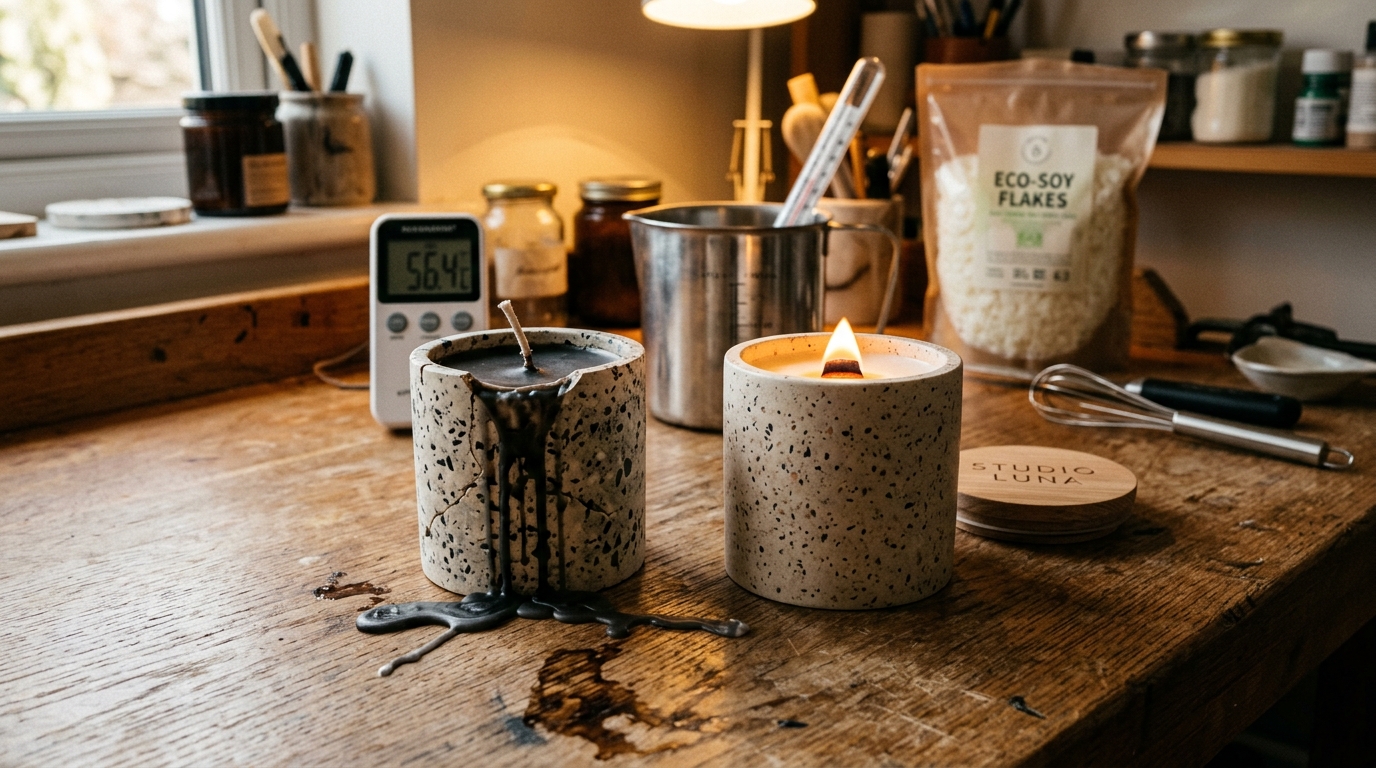
Studio Comparison: Unsealed porous jar sweating fragrance oil (left) vs chemically bonded high-temp sealed jar (right).
Calculate Your Exact Jesmonite & Wax Recipes
Avoid overfilling or guessing powder splits. Calculate exact 2.5:1 AC100 weights and fragrance load percentages in seconds.
A customer sent me a photo that made my stomach drop.
She had purchased four of my handmade terrazzo candle jars on Etsy. Two days later, she lit the sandalwood vanilla candle on her solid oak coffee table. Within three hours, hot soy wax and yellow fragrance oil had seeped straight through the stone wall of the vessel, leaving a dark oil ring on her table.
I had spent months perfecting my Jesmonite AC100 terrazzo casting technique. The jars looked and felt like boutique luxury items.
So why did they sweat liquid fragrance oil? Because Jesmonite is a porous gypsum-acrylic composite, and standard craft sealers break down under candle flame heat.
The 3 Structural Reasons DIY Candle Vessels Sweat Oil
To solve this problem permanently, I ran a series of burn tests on my studio workbench with AC100 terrazzo jars, comparing standard craft sealers against heat-rated penetrating sealers using 464 soy wax with a 10% fragrance load.
Here are the three structural flaws that cause unsealed or improperly treated vessels to leak:
1. Using Standard Mod Podge or Acrylic Decoupage
Standard craft sealers soften at just 45°C to 50°C (113°F to 122°F). When a wooden or cotton wick burns down into the bottom third of the vessel, the interior stone wall reaches 65°C to 75°C. The acrylic film liquefies, dissolves into the wax pool, and allows hot oil to penetrate the micro-pores of the casting.
2. Underestimating Fragrance Oil as a Chemical Solvent
Fragrance oils are concentrated chemical solvents containing synthetic aroma compounds like vanillin and limonene. Even if a sealer repels pure tap water, fragrance oils will slowly break down weak surface sealers over a 3-week cure period.
3. Pouring Hot Wax Into Jars Less Than 5 Days Old
Jesmonite reaches 90% strength within 2 hours, but it takes 5 to 7 full days for internal hydration moisture to evaporate. If you pour hot 80°C melted wax into a 24-hour fresh jar, the trapped moisture creates internal steam pressure, causing hairline thermal stress fractures.
Sealer Heat Resistance & Oil Barrier Comparison
Here are our workshop observations and heat tolerance benchmarks across 5 common craft topcoats:
| Sealer Brand / Type | Heat Tolerance (°C) | Oil Barrier (10% Fragrance) | Burn Test Observation |
|---|---|---|---|
| Beeswax / Mineral Oil Paste | 42°C | ❌ NOT RECOMMENDED | Melted off in 90 mins; heavy oil bleeding |
| Gloss Mod Podge Acrylic | 48°C | ❌ NOT RECOMMENDED | Blistered, peeled, and yellowed near wick |
| Jesmonite Official Acrylic Sealer | 60°C | ⚠️ MODERATE | Great for water & coasters; slight oil sweating on vessel base |
| Polyvine Heavy Duty Varnish | 85°C+ | ✅ HIGH RESISTANCE | Maintained seal, zero discoloration in burn tests |
| Penetrating Silane Stone Guard | 120°C+ | ✅ EXCELLENT | Deep pore penetration; robust barrier against fragrant oils |
The 3-Step Sealing Protocol for Durable Candle Vessels
Follow this exact workshop protocol to seal the porosity of your composite jars and protect your craft projects:
- Let Demolded Jars Degas for 5 Full Days: Never apply sealer to a jar fresh out of the silicone mold. Let hydration moisture evaporate in a dry, ventilated room for at least 120 hours.
- Apply 3 Coats of Penetrating Stone Guard: Brush the first coat liberally so the liquid soaks deep into the gypsum pores. Wait 2 hours before applying coat #2 and coat #3.
- Apply a Heat-Rated Topcoat on Inner Walls: Coat the inside of the jar with high-temperature dead-flat varnish. Allow 48 hours of complete curing before pouring hot melted soy wax.
Related Craft Calculation Workbenches
Handmade Jesmonite candle vessels are among the highest-margin craft products on Etsy in 2026. Protect your shop's reputation by using heat-rated penetrating sealers on every batch!