Plaster of Paris vs. Jesmonite vs. Craft Concrete:
Strength, Density & Cost Breakdown
Published on August 26, 2026 • By MakerRatio Materials Lab • Calibrated via ASTM Mechanical Standards
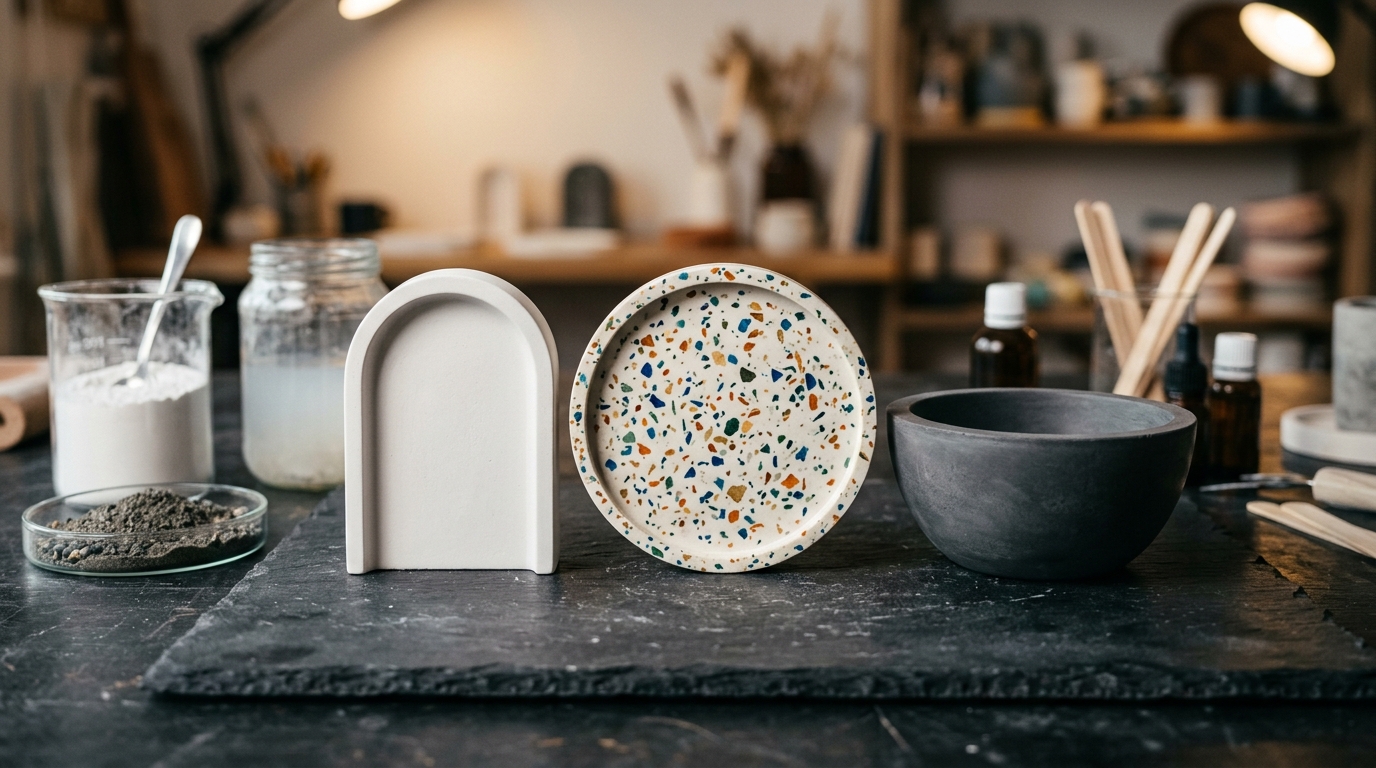
Studio Comparison: Pure gypsum Plaster of Paris (left), terrazzo Jesmonite AC100 (center), and fine craft concrete (right).
Which casting material should you choose between Plaster, Jesmonite, and Concrete? Choose Plaster of Paris for ultra-budget hobby crafts ($2/kg) with rapid 30-minute demold times, but keep in mind it is brittle (15 MPa) and dissolves in water. Choose Jesmonite AC100 for luxury home decor, vibrant pigments, and terrazzo chips ($18/kg) requiring superior flexural impact strength (30 MPa) and smooth demolding without toxic fumes. Choose Craft Microcement/Concrete for outdoor planters and heavy durable vessels ($3/kg) where maximum compressive strength (45+ MPa) and stone weatherability are required.
Calculate Exact Mineral Split Ratios
Calculate the exact liquid-to-powder split for 2.5:1 Jesmonite AC100, 70% Plaster of Paris, or 20% water concrete mixes.
If you browse Instagram or Pinterest, you will see thousands of stunning arch trays, terrazzo coasters, and ribbed planter pots labeled interchangeably as "Jesmonite", "Eco-Resin", "Gypsum", or "Modern Concrete".
For craft sellers and studio artisans, choosing between these three mineral casting systems involves direct trade-offs between material cost per batch, impact durability, water resistance, and production cure cycles.
Pouring a plant pot with cheap Plaster of Paris will result in an item that disintegrates upon watering, while making a lightweight indoor jewelry tray out of heavy structural concrete adds unnecessary shipping postage. Here is the raw material science breakdown to help you pick the right composite for every workshop project.
Head-to-Head Material Science Comparison Matrix
| Material Property | Plaster of Paris | Jesmonite AC100 | Craft Microcement |
|---|---|---|---|
| Chemical Base | Calcium Sulfate Hemihydrate | Acrylic Resin + Gypsum Mineral | Portland Cement + Fine Silica Sand |
| Standard Mix Ratio | 100g Powder : 70g Water | 2.5g Base Powder : 1g Acrylic Liquid | 100g Cement : 20g Water |
| Compressive Strength | 12 – 18 MPa (Brittle) | 25 – 35 MPa (High Impact) | 45 – 60 MPa (Structural) |
| Specific Gravity (Density) | 1.40 g/ml (Lightweight) | 1.75 g/ml (Solid stone feel) | 2.10 g/ml (Heavy density) |
| Demold Time | 25 to 45 Minutes | 30 to 60 Minutes | 24 to 48 Hours |
| Average Cost ($/kg) | ~$1.50 – $3.00 / kg | ~$16.00 – $22.00 / kg | ~$2.50 – $5.00 / kg |
| Water Resistance | Poor (Softens & Chalks) | Moderate (High with sealer) | Excellent (Weatherproof) |
When to Use Each Material System (The Studio Guide)
Plaster of Paris: The Rapid Budget Champion
Ideal For: Prototype molds, dry decorative statues, chalk-art pieces, and budget hobby crafting.
Plaster sets in under 30 minutes via an exothermic recrystallization of gypsum crystals. It is wonderfully affordable and lightweight. However, because it contains no acrylic polymer binders, the surface is soft and scratches easily under fingernail pressure. Never use Plaster of Paris for wet planters or candle vessels.
Jesmonite AC100: The Luxury Retail & Terrazzo Standard
Ideal For: High-end Etsy home decor, terrazzo jewelry trays, coaster sets, and candle vessels.
Jesmonite replaces water with a pure aqueous acrylic polymer emulsion. As the mineral base cures, the acrylic chains interlock through the gypsum matrix, imparting extraordinary flexural strength and a luxurious, cool-to-the-touch natural stone feel. It captures microscopic silicone mold detail and accepts intense, vibrant mineral pigment dispersions without bleeding.
Craft Concrete / Microcement: The Indestructible Workhorse
Ideal For: Outdoor succulent planters, heavy bookends, industrial soap dishes, and architectural home accessories.
Craft microcement combines Portland cement with ultra-fine silica sand (no coarse gravel). It reaches rock-hard compressive strengths exceeding 50 MPa. While it requires a 24-hour demold wait and a 7-day cure to reach full strength, it is weather-proof, freeze-thaw resistant, and extremely cost-effective for large, heavy vessels.
Verified Workshop Materials for Casting
Whether working with budget plaster or premium acrylic composites, match your recipes strictly to verified manufacturer Technical Data Sheets:
Recommended Materials & Tools for this Project
DAP High-Strength Art & Craft Plaster of Paris
Specification: Ultra-fine gypsum plaster powder. 2:1 water mixing ratio for molding decorative figurines, trays, and chalkware.
Heavy-Duty Silicone Coaster Molds Pack
Specification: Flexible, tear-resistant platinum silicone molds (circle and hexagon) with thick sidewalls to prevent bowing.
Transparency Notice: As an Amazon Associate, MakerRatio earns from qualifying purchases at zero extra cost to you. Product recommendations are selected based on verified Manufacturer Technical Data Sheets (TDS). Always consult chemical safety data before pouring.
Frequently Asked Questions About Plaster, Jesmonite & Concrete
Can I mix acrylic paint or resin pigment into Plaster of Paris?
Yes, but sparingly. Adding more than 5% liquid acrylic paint adds unmeasured water to the formula, weakening the gypsum crystal matrix and making the cured piece soft and chalky. For vibrant, deep colors without weakening the plaster, use dry powdered mica pigments or specialized iron-oxide mineral powders.
Can I use Plaster of Paris to make candle vessels?
We strongly advise against it. Pure Plaster of Paris absorbs hot candle wax and fragrance oils rapidly. When heated by the burning flame, trapped moisture converts to steam, which can cause the brittle plaster vessel to crack or shatter. Use Jesmonite AC100 or craft concrete with an appropriate penetrating sealer for candle jars.
Why did my concrete planter crack after 3 days?
Concrete does not dry; it cures through chemical hydration. If you demolded too early or let the pot dry in hot, direct sunlight, the water evaporated before the cement silicate bonds could form, causing severe shrinkage cracking. Keep freshly poured concrete wrapped in plastic or in a humid room for 48 hours to ensure maximum hydration strength.
Is Jesmonite environmentally friendly (Eco-Resin)?
Yes. Jesmonite AC100 is classified as an eco-composite because it is water-based, solvent-free, and contains zero Volatile Organic Compounds (VOCs). Unlike traditional epoxy or polyurethane casting resins, it produces zero toxic fumes, cures without petrochemical cross-linking agents, and is non-hazardous to ship and handle.
Calculate Your Exact Mineral Split
Master your casting ratios and material costs with MakerRatio's validated composite calculators.